Labels

Evolution (13) DNA (6) Bible prophecies (5) Blood Moon (4) prophecies (4) Blind faith (3) Book of Daniel (3) Eve (3) God (3) God's fingerprints (3) Intelligent Design (3) Moses (3) Only way (3) Star of Bethlehem (3) Trinity (3) mtDNA (3) origin of life (3) Adam & Eve (2) Allah (2) Analogy of Trinity (2) Ashley Madison (2) Bible reliability (2) Common Ancestor (2) Exodus (2) Hawking (2) Herod (2) Islam (2) Jericho dispute (2) Jesus (2) Muslims. (2) Nicky Cruz (2) Pharaohs (2) Plagues (2) RNA (2) Torah (2) atheism (2) fun story (2) genocide (2) iron teeth monster (2) leap of faith (2) magi (2) rationality (2) science & faith (2) science updates (2) serpent (2) skeptics (2) sufferings (2) truth (2) virgin birth (2) AI (1) Abraham's test. 自導自演 (1) Acts (1) Adam (1) Akhenaten (1) Andrew Chan (1) Ape DNA (1) Armageddon Book of Joel (1) Astrology (1) Astronomy (1) Atheists (1) Ave Maria (1) Balaam (1) Baphomet (1) Beheadings (1) Bethlehem babies (1) Bethlehem star (1) Bible (1) Bible & Phi (1) Bible & Science (1) Bible scurtiny (1) Big Bang (1) Book of Luke (1) Bryant Wood (1) Buddhism (1) Canaan Conquest. (1) Carbon 14 tests (1) Constantine (1) Council of Nicaea (1) Da Vinci Code (1) Dan Brown (1) David Wood (1) Dead Sea Scrolls (1) Doom sayings (1) Evolution,Darwinism (1) Fibonacci number (1) Forgiveness (1) Garden of Eden (1) Genome comparison (1) Goat statue (1) God delusion (1) God is cruel? (1) God's glory (1) God's grace (1) God/man dual nature (1) Golden Angels Choir (1) Golden ratio (1) Gravity Wave (1) He will carry you. 4 You tube songs (1) Holocaust (1) Hominid Hype (1) Homo Naledi (1) ISIS (1) Information (1) Isaiah 53 (1) Jericho (1) Jericho walls (1) Jesus & Gospels (1) Jesus' Deity (1) Jesus' tomb (1) Jesus' youth (1) John the Baptist (1) Joseph's scheme (1) Karma (1) Killing God (1) Mary promotions (1) Michael Brown (1) Musical chords (1) Nabeel Qureshi (1) Nikolas Cruz (1) OT Bible (1) Paul's conversion (1) Phi (1) Prophecies.. (1) Prophecies.Bk of Daniel (1) Quran (1) Richard Dawkins (1) Roman Empire (1) Satan (1) Sh'khinah (1) Son of God (1) Suicide (1) Ted Bunny (1) The Cross & guillotines (1) Tree of Knowledge (1) Trinity analogy (1) Wisemen (1) Y DNA (1) absurdity of life (1) acoustic resonance (1) animal migrations (1) apologetics (1) atheist Pro (1) chicken or eggs (1) comet (1) comparisons of religions (1) creation (1) dialogue with M (1) doubting Thomas, (1) earthquake (1) emperor's cloth (1) empty tomb (1) evil (1) executions (1) fabrication (1) falling down (1) fine tuning of universe (1) free will (1) goodness (1) hallucination (1) hell (1) history (1) human hibernation. suspended animation (1) justice (1) life is short (1) logic (1) meaning of life (1) movie (1) multiverse (1) nature's laws (1) objections fr Jews (1) original sin. Bible out of context (1) original sin. temptations (1) pains (1) philosophy. (1) philosophy. Big Bang (1) popes (1) porn addiction (1) probabilities (1) reality check (1) reincarnation (1) relationship (1) restoration (1) resurrection (1) sanke handler (1) science & God (1) self disclosure (1) short skit (1) sin (1) sins (1) snake (1) songs (1) stumbling blocks (1) the Star of Bethlehm (1) theology (1) unusual birth (1) who made God (1) why. love letters (1) wise men (1) 人類的起源, 進化論 (1)

Tuesday, May 15, 2018

Studying Koran an Imam found Jesus!


Mario Joseph

Imam found Jesus by studying the Koran, paid a price for rejecting Islam


Changing Tracks: Mario Joseph, Muslim Imam convert - YouTube

https://www.youtube.com/watch?v=WjUXd4qW9mg
Apr 21, 2014 - Uploaded by HM Television (English)
As a Muslim imam, Mario Joseph was well-versed in the Koran and in the teachings of the Islamic religion. In ...


During his mother’s pregnancy doctors wanted to abort him due to an infection in his mother’s womb, but as a devout Muslim she refused.
“The doctors compelled my mother to kill the child (me), but she is a very good devotee of Allah, God. So she did not accept their advice,” Mario Joseph explained on HM Television.
At the time of his mother’s pregnancy crisis she prayed: “Allah, life belongs to you so I know you can give life. If you give life to this baby I will surrender this baby to you.”
Joseph was led to believe his birth was miraculous, but his mother’s vow of dedication to Islam carried unwanted consequences. “Because I had been dedicated to God, my parents did not send me to school. My childhood was very bad,” he recounted.
At eight-years-old they sent him to a Muslim-Arabic college so he could prepare to become an imam. Remarkably, after 10 years of study, he completed the goal.
Working as a parish priest, he preached that Jesus Christ is not God. “For me, God was only Allah and I believed that Allah never got married, so no sons for Allah. So I preached that Jesus is not God.”
Then someone asked him one day, “Who is Jesus?”
While he was certain Jesus was not God, he wasn’t quite sure how to answer the question.
He studied the Koran exhaustively for an answer. “When I read it, the name of the Prophet Mohammad I found in the Koran in four places, but the name of Jesus I found in 25 places,” he told HM Television.
He began to wonder, Why does the Koran give more preference to (the name of) Jesus?
Even stranger, the only name of a woman he found in the Koran is Mariam, the mother of Jesus – no other woman’s name.
In other places in the Koran he found Jesus referred to as the “Word of God” and the “Spirit of God.”
Another pointed to his title: “Jesus Christ.”
“The Koran says that Jesus cured a man born blind and a man with leprosy. Curiously, the Koran says that Jesus gave life to dead people, Jesus went to heaven, he is still alive and he will come again.”
He realized that Mohammad never cured any sick people and never raised the dead. “He himself died. And according to Islam he is not alive and he will not come back.”
Joseph discovered many differences between Jesus and Mohammad. As a result of his study, he was not ready to call Jesus God, but it slowly began to dawn on him that Jesus might be a prophet greater than Mohammad.
A return to the college
He went back to his professor at the Arabic college and asked him, “Teacher, how did God create the universe?”
“God created the universe through the word,” the man replied.
“Is the word the creator or the creation?” Joseph inquired. He thought, If my teacher says that the Word is the Creator, then Jesus is the Creator, and Muslims must become Christian. If he says the word is the creation, then how did God create the word?
His instructor began to fume, realizing he was trapped by Joseph’s logic. “He was quite angry. He pushed me out of his room and said, ‘Word is not the Creator nor the creation, you get out of here.”
They met later and the professor told him, “If there is a son of God I must show him the wife of God. Without a wife, there is no chance of having a son.”
Then Joseph showed him a portion from the Koran. “The Koran says God can see without eyes, God can talk without a tongue, God can hear without ears. If that is the case, he can have a child without a wife.”
After arguing with the man, Joseph left, went home and opened the Koran randomly. It fell open to Chapter 10, verse 94, which says: “If you have any doubt in this Koran which I give to you, go and read the Bible or ask those who read the Bible.”
Joseph put the Koran on his chest and said, “Allah, tell me what I should do, because your Koran says Jesus is still alive and Mohammad is dead. Who should I believe?”
Studying the Bible
“I decided to study the Bible and I went to a retreat center called the Divine Retreat Center in India.” He read John chapter one: ‘In the beginning was the Word and the Word was with God and the Word was God…’
“So my holy Koran says Jesus is the Word of God, now the Holy Bible also says Jesus is the Word of God.” He vacillated in his thoughts, thinking he was a Muslim one day and the next that he might be a Christian.
John 1:12 had a big impact on him. “It was such a lovely word for me. It says that if anyone receives Jesus, he gives them the power to become children of God.”
He was also struck by Jesus’ teaching about prayer, which begins with the word Abba. “I cannot express my joy whenever I call my God dad and whenever I think that the Creator of the universe is my dad I have a kind of joy which I cannot express…it’s beyond my experience…an experience I cannot explain.”
The power of the Word and the Spirit touched his heart and he exclaimed: “I need Jesus because I want to be a child of God and call my God ‘Daddy.’
He was born again!
“I was gone a long time and I was missing from my home,” Joseph recounted. “My parents thought I was in the moscheet and the moscheet people thought I was in my house. Then they communicated and searched for me everywhere.”
When his father learned he was at the retreat center, he erupted in fury. “My dad came there and beat me very badly. I was bleeding from my nose and I was unconscious. Then he took me home.”
When Joseph regained consciousness, he found himself in a small room without any clothing. “I was completely naked and my hands and legs were chained very tightly and I could not even speak because there was chili powder in my mouth, nose, eyes and wherever the wound was they had placed some chili there also to burn me.”
His father thought he was obeying the law of the Koran, which metes out harsh penalties for those who reject Islam.
“They did not give me food or water. Within a few days I was dried up and my lip broke. I was trying to lick a little blood to wet my throat, then my brother came and passed urine in my mouth. He said that’s the punishment for you to believe in Christ.”
After 20 days confined in the small room Joseph became like a dead man.
“My dad came to the room and removed the chain and I was not awake. He choked my throat very deep to know if there was life in my body. When he choked very deep I couldn’t breathe. So I opened my eyes and I could see a big knife in his hand.”
“It’s your last moment,” he said. “If you need Allah, I will allow you to live. If you need Jesus I will kill you.”
Jospeh knew his father well enough to know he would carry out the threat. Then something strange and unexpected happened.
“Suddenly a light fell on my forehead, like moonlight. Something fell on me and there was a kind of electric shock and something passed through my veins. From somewhere energy flowed through my body. I couldn’t control myself there was so much energy in my bones. I pulled my dad’s hand down and I cried out ‘Jesus!’
When he cried ‘Jesus’ his father fell to the ground – on top of the knife. “There was a big wound on his chest and there was bleeding, and some kind of foam was coming from his mouth and he was screaming.”
His mother, brothers, and sisters didn’t know what was happening. “They thought my dad was already dead so they took him and ran to the hospital. When they ran to the hospital they forgot to lock my room from the outside.”
With a burst of supernatural energy supplied from above, he left the room, put on his father’s clothes, ran outside and hailed a taxi.
The taxi driver who picked him up was a Christian! He bought Joseph some juice and food and took him to another city.
“That day I understood Jesus is alive, even now. I know he is present everywhere,” he told HM Television.
“After my conversion 18 years ago I never thought that the Muslims would allow me to live. I have preached in the Middle East. My Jesus is alive and he is protecting me.”
Later, his parents conducted a mock funeral service for their son. “In my hometown I have my own grave,” he noted.
“If you ask me who made me Christian it’s not any fathers; it’s not any sisters; it’s not any bishops; it’s not any cardinals; it’s not even the Pope; but the holy Koran converted me to Christianity.”

If you want to know more about a personal relationship with God, go here

Saturday, May 5, 2018

No Collusion among Eyewitnesses Due to Undesigned Coincidences

A New Defense of the Historical Reliability of the Bible

Over the last few decades, Christian apologetic defenses of the historicity of the New Testament have typically pursued a minimal facts approach according to which one seeks to establish a basic set of core claims about the life and death of Jesus which are most widely accepted by biblical scholars (e.g. crucifixion; empty tomb; post-resurrection appearances). One then argues that the resurrection is the best hypothesis to explain those commonly agreed upon facts.
The minimal facts approach is helpful for justifying a basic commitment to the most important historical claims of Christian faith. On the downside, it offers no defense of the historical veracity of vast portions of the New Testament.
The fact is that there are other apologetic strategies which offer a more robust historical defense of the New Testament documents. And in her new book Hidden in Plain View, philosopher Lydia McGrew introduces one of those approaches. She calls it the argument from undesigned coincidences: rather than focus on minimal facts, it looks instead for evidence of broad historical reliability in New Testament documents based on the phenomenon of so-called undesigned coincidences.
The Concept of an Undesigned Coincidence
So what is an undesigned coincidence? Let's begin with a simple example. Imagine that there are two eyewitnesses to a robbery in a café. Notably, while Smith describes the thief as a very tall male, Jones does not mention the thief's height at all. However, Jones does mention in passing that as the thief ran out of the café, the hanging light fixture was left swinging.
That detail raises a question: what caused the light to swing? Since the thief would need to run underneath the light to exit the café, it is a reasonable supposition that his head brushed against it as he left. And given that the light is suspended 6'5" off the floor, that would imply that the killer was very tall. And so, Jones' seemingly irrelevant observation actually dovetails nicely with Smith's physical description of the thief.
The fit between Smith's and Jones' testimonies is notably different than if they had both simply described the thief as "very tall". For one thing, a simple agreement in testimony would be liable to the interpretation of collusion: if Smith and Jones had given identical statements, it is possible that they might have intentionally coordinated their reports. The fact that their testimonies differ supports the conclusion that they are indeed independent witnesses. And the fact that those testimonies also dovetail on the question of height suggests that they are both reliable witnesses of the same event.
With this in mind, here is McGrew's formal definition of the concept:
"An undesigned coincidence is a notable connection between two or more accounts or texts that doesn't seem to have been planned by the person or people giving the accounts. Despite their apparent independence, the items fit together like pieces of a puzzle." (12)


Just as an investigator looks for undesigned coincidences between testimonial witnesses as a means to corroborate the reliability of the witnesses, so McGrew points out we can evaluate the New Testament documents in like manner. Where differences may exist, she avers, they tend to be superficial: look deeper and one finds a reassuring connection between witnesses, often of a subtle, complex, and elegant sort which defies any easy dismissal as chance or collusion. Instead, the most plausible interpretation of these various examples is that we have independent and reliable witnesses of the purported events.
Two Examples of Undesigned Coincidences
Hidden in Plain View provides a survey of multiple such coincidences in the New Testament as part of a broad cumulative argument in favor of general historical reliability. The book consists of six chapters divided into two parts: Part One focuses on undesigned coincidences in the Gospels and Part Two focuses on undesigned coincidences between Acts and the Pauline Epistles. In this section, I will recount two examples from the Gospels that pertain to the same event, the feeding of the five thousand.
Example 1: The Green Grass (pp. 66-67)
McGrew points out that three Gospels mention the fact that the crowds sat down on grass. (This detail contrasts notably with the feeding of the four thousand which makes no reference to grass.) But only Mark observes that the grass was green(6:39). Why does this detail matter? Because grass is only green in that region in the spring just after the winter rains. Thus, that detail locates the miracle in the springtime.
Next, McGrew points out that the Gospel of John states that the miracle occurred at the time of Passover (John 6:4), and Passover occurs in the spring.
Note that neither Mark nor John directly states that the miracle occurred in spring. Rather, one says the miracle occurred when there was green grass and the other says the miracle occurred during Passover. But both of those details locate the event in the spring. McGrew observes, "here we have a perfect fit between John's casual reference to the time of year and Mark's specification of the detail of the green grass." (66)
Example 2: Why ask Philip? (pp. 107-110)
Our second example begins with Jesus asking Philip where they can buy bread to feed five thousand people (John 6:5). To be sure, McGrew points out that Jesus' question was not serious: he was simply setting up his anticipated miracle. Nonetheless, the question arises: why ask Philip in particular? After all, he was not one of the more prominent disciples (108).
The answer provides our second intriguing coincidence. McGrew observes that Luke places the feeding of the five thousand near the town of Bethsaida (Luke 9.10). Earlier in John 1:43-44 we learn that Philip is from Bethsaida (109). When we add these details together, we find a satisfactory answer to our "Why Philip?" question. Jesus directs his question to Philip because they are located near Philip's hometown. Again, we find an elegant answer to a question which indirectly confirms the accuracy of two different Gospels (Luke and John).
The green grass and Jesus' question to Philip are but two examples of such serendipitous coincidences: the book outlines close to fifty more connections between the Gospels, Acts, and the Pauline epistles. Some are simple but others are complex and nuanced. Add them together and one has a powerful cumulative case argument for the general reliability of the bulk of the New Testament documents.
Concluding Reflections
It is worth pointing out that McGrew's argument is not new. As she observes, this style of argument had many defenders in the 18th and 19th centuries including William Paley (yes, the same William Paley who imagined finding a watch in the heath). As McGrew puts it, "There is no doubt that I am standing on the shoulders of giants–a fact that I freely and gratefully acknowledge" (24).
McGrew has done a very great service to the Christian community in writing this clear and engaging introduction to a fascinating and long-neglected line of argument. I've been teaching a seminary apologetics course for fifteen years and not many books challenge me to rethink my positions. But Hidden in Plain View has caused me to do just that as regards the minimal facts approach. I now have a much greater appreciation for the richness of reliability arguments for the details of the New Testament based on the fit between various undesigned coincidences.
So how might a skeptic respond? Since most of these points of agreement are too complex and/or subtle to be explained as intentional, I suspect the main skeptical response will be to dismiss these coincidences as exactly that: coincidences. In other words, in any eclectic collection of texts, one will inevitably find various points of surprising agreement. And by counting the coincidental hits and dismissing the misses, one gets a skewed sampling of the data. Or so the objection might go.
I disagree with that hypothetical skeptic's response. The method that McGrew applies here is not different from that of any good historian ... or forensic investigator. And the dozens of points of agreement that she identifies provide a compelling cumulative case for the historical care and reliability of the various writers. McGrew puts it well:
"The big picture is this: This is what truth looks like. This is what memoirs from witnesses look like. This is what it looks like when people who are trying to be truthful and who possess reliable memories of things that really happened have those memories put down in writing. This is evidence for the Gospels [and Acts and the Pauline epistles] hidden in plain view." (129)

Thursday, May 3, 2018

An evangelical dance with wolf (political power)?


The Wheaton Meeting, Political Dealmaking and the Crisis of Evangelicalism ( click this link for the whole article)

The central crisis facing us is that the gospel of Jesus Christ has been betrayed and shamed by an evangelicalism that has violated its own moral and spiritual integrity.


...An evangelical dance with political power has been going on from the time of Billy Graham, through the Moral Majority and the religious right, to the Tea Party, and most recently with the white evangelical vote—the result being, as honorary Chairman of the Lausanne Movement Doug Birdsall has said, "When you Google 'evangelical,' you get Trump."...

(How sad!!! --BH--)


This points to an evangelical crisis over so many issues of power: racial, political, economic, cultural, right against left, Republican against Democrat, rich against poor, white against black, men against women, and so on. But winning power was the goal of Judas, not Jesus. A Faustian pact between evangelicals and power—even when claimed on behalf of the kingdom—cannot be entered in the name of Jesus Christ without betraying the abdication of power inherent in the incarnation. "For God so loved the world that he gave his only begotten son . . . ." (John 3:16)

Abuse of power is central in the national debates of the moment. Whether we think about US militarism, or mass incarceration, or the #MeToo movement (or mistreatment of women in general), or the police shootings of unarmed, young, black men, or the actions of ICE toward child and adult immigrants, or gun use and control, or tax policy—all this is about power. The apparent evangelical alignment with the use of power that seeks dominance, control, supremacy, and victory over compassion and justice associates Jesus with the strategies of Caesar, not with the good news of the gospel...

Image result for wheaton meeting for evangelical crisis

Thursday, April 19, 2018

'Hero" Pilot Tammie Jo Shults Has Strong Faith


'Hero' Southwest Airlines Pilot Tammie Jo Shults a 'Strong Christian' Whose Faith Guided Safe Landing


tammie-jo-shults
Tammie Jo Shults, the pilot hailed as a hero for safely landing a Southwest Airlines plane after one of the jet's engines failed, is a "strong Christian lady" whose faith contributed to her calm state amid the emergency landing, according to friends and family.

...A Christian who is married to a fellow pilot and has two children, Shults was once quoted as saying that sitting in the captain's chair gave her "the opportunity to witness for Christ on almost every flight."
Speaking to The Washington Post, Shults' mother-in-law said the pilot's faith gave her peace and wisdom during the frightening situation.
"I know God was with her, and I know she was talking to God," Virginia Shults said...

Saturday, April 14, 2018

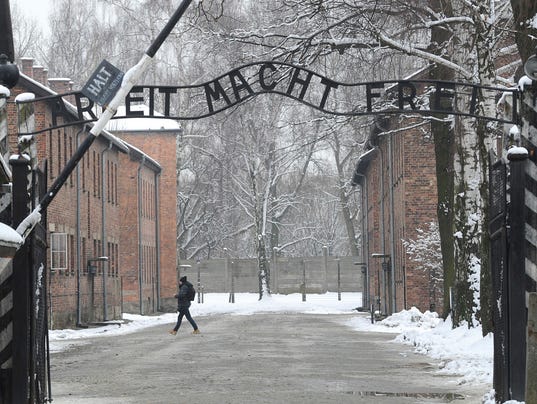
Why did God allow the Holocaust?


Image result for holocaust

Why did God allow the Holocaust?www.gotquestions.org

Question: "Why did God allow the Holocaust?"

Answer: 
In dealing with the problem of evil in the world, we run into many problems like this one. Could God have prevented the Holocaust? Yes, He could have. He could also have prevented Stalin’s massacres in the U.S.S.R., the Spanish Inquisition’s torture of dissidents, and Nero’s reign of terror. In each case, God allowed evil men to exercise a certain amount of power for a short period of time. 

Ultimately, we do not know the reasons for what God allows. His ways and thoughts are infinitely higher than ours (Isaiah 55:8-9). His sovereign plan takes in the whole scope of history, past, present, and future, encompassing every possible course of action, every cause and effect, every potentiality, and every contingency. There is no way we could possibly fathom the intricacies of His design. By faith, we trust that His plan is the best plan possible for restoring fallen humanity and a cursed world to righteousness and blessing. 

But we can understand this: God’s permission is not the same as His approval. God allowed Adam to eat of the forbidden tree, but He did not approve of the action. In the same way, God’s allowing the Holocaust in no way suggests His approval of it. God is grieved by the sinfulness of man and the hardness of his heart (Genesis 6:6Mark 3:5). 

We also know that God has done everything possible to redeem us from the sin which would destroy us. He gave His only Son, who sacrificed His life for our sin and took our penalty. All who turn to Jesus Christ in faith are saved. The sin in this world, and horrors such as the Holocaust, are a direct result of mankind’s continued rebellion against God.

While nothing can justify the Holocaust, we do see at least one good thing which came from World War II: Israel now exists as a nation. The Holocaust was a primary reason the White Paper of 1939 was rescinded, freeing Jews to immigrate to Israel. The fact that, as of 1948, the Jews have a restored national identity helps to fulfill such biblical prophecies as Ezekiel 37 and Matthew 24. Defeating Nazism and giving the land of Israel back to the Jews is a classic example of God’s thwarting Satan’s plan and bringing about good in spite of the evil.

In all of His doings, God is just (Psalm 145:17). The blame for the Holocaust lies squarely on the shoulders of sinful humanity. The Holocaust was the product of sinful choices made by sinful men in rebellion against a holy God. If the Holocaust proves anything, it is the utter depravity of man. Just fourteen years after "the war to end all wars" (World War I), Hitler rose to power. What is even more shocking is that millions followed him, enabling his horrific policies and pursuing a path to national destruction. 

And while Nazism took hold in Germany, where were the European churches? Some, it is true, stood fast against the evil in their midst, and some churchmen, such as Dietrich Bonhoeffer, paid the ultimate price for dissenting. But they were the minority. Most churches of the era acquiesced to Nazi Party rules and remained silent while the Jews were slaughtered. Where were the world leaders? Other than England’s Winston Churchill, the world’s politicos took the route of isolation or appeasement. Neither worked. Where were the good, decent people? Edmund Burke is often quoted as saying, "All that is necessary for evil to triumph in the world is for enough good men to do nothing." Although there were a few Germans and other Europeans such as Oscar Schindler and Corrie ten Boom and her family, who risked their lives to save thousands of Jews from annihilation, most remained silent and the Holocaust ensued. The question is not so much "Why did God allow the Holocaust?" but "Why did we?"

God gives mankind freedom of choice. We can choose to follow Him and take a stand for righteousness, or we can rebel against Him and pursue evil. The problem resides in the heart of man. "The heart is deceitful above all things and beyond cure. Who can understand it?" (Jeremiah 17:9). Until man’s heart turns to God, the world will continue to witness "ethnic cleansings," genocides, and atrocities such as the Holocaust.

(For more thinking,  you may click the link below)

Friday, April 6, 2018

Proof of an Afterlife?


Proof of an Afterlife?( link to the original article)
?Related image
The Discovery is a film about a scientist who makes a discovery so significant it drastically alters the world. He discovers brain waves continue to emit from the mind after a person is dead. What's the big deal? It's scientific proof of an afterlife. Somehow, someway the deceased's brain continues to function after their heart has stopped.
People respond by committing suicide, millions of them, all around the world. Why? With definitive proof of an afterlife, they now have hope for a better life. They don't have to linger in loneliness or struggle with cancer. All they have to do is pull the trigger, and they can be reunited with their loved ones.
If you had definitive proof of an afterlife, how would you respond? If you knew, beyond the shadow of a doubt, you'd enter another life after you die, what would you do? Would you pull the trigger?
Pulling the Trigger
St. Paul also made a powerful discovery that radically altered history. He encountered a person from the other side, the resurrected Christ, and came to believe that Jesus was not only raised from the dead, but all who hope in Him will be raised to eternal life. But his response was different. Instead of taking his life, he gave his life. Instead of leaping to find what's on the other side, he transformed his life on this side. You could say he "pulled the trigger" on his old life, and his old life wasn't too shabby.
He formerly went by Saul, and according to the standards of Judaism Saul was no slacker. He was circumcised on the eighth day, of the people of Israel, of the tribe of Benjamin (Phil. 3:5). In other words, he wasn't a newbie in the faith; he was circumcised so early he was raised in the faith. And of all the ethnicities in the world, he was from the chosen people. And out of all of Israel, he was from a special tribe, the tribe that furnished Israel with their very first king. Saul had great pedigree, but he had even more.
His zeal eclipsed many of his contemporaries, aligning him with some of Israel's greats (Moses, Elijah, Phineas). An expert in the Law, Saul was esteemed by many. You might say he was the Steve Jobs of Judaism, with a passion for perfection to go with it. Saul arrested and persecuted Christians who perverted his Jewish faith. No one questioned his commitment, until his encounter with the risen Christ
Then something switched, and his zeal ran toward Christ in a life of hopeful self-denial. He traveled unreliable roads and weathered seas throughout the Mediterranean to share the good news about Jesus, all while living off of his tent business and the support of friends. He wrote letters to struggling churches, and his writings eventually comprised half the New Testament. Along the way, he encountered misunderstanding, ridicule, rejection, prison, flogging, and even shipwreck. Yet he persisted. Why? The resurrection of Jesus had radically changed his notion of success…
Glory in Regret
Eventually the scientific crew working on the "the discovery" realizes the post-mortem brain signals are actually connected to episodes of a person's past, not to an afterlife. When they convert the waves into images, they observe the episodes are actually moments of regret in a person's life. Unknowingly, the suicides are waking up, not to a circle of loved ones but moments of intense regret. The central character gets stuck in a loop trying to prevent the suicide of a woman he loves.
Faith in Jesus, however, does not lead to an eternal loop of regret. Rather, to borrow a phrase from C. S. Lewis, it allows heaven to work backwards. The meaning, love, joy, and goodness of heaven are transported back into the heart through union with Christ, which help us weather things like loneliness and cancer. Of course, our experience of heaven working backwards is uneven. We are, after all, still on earth so to speak. And once we reach heaven, Lewis notes that even a past agony, and I'll add even a regret, will turn into a glory. Why? Because that old pain will serve to intensify the present, everlasting comfort of Christ's nail-scarred hands. Our regret will be faint, but a vivid reminder of the grand discovery—the remarkable mercy of Christ, who rose to forgive and renew all things.
Jonathan Dodson is the founding pastor of City Life Church in Austin, TX which he started with his wife, Robie, and a small group of people. They have three children. He is also the founder of gcdiscipleship.com and author of a number of books including The Unbelievable GospelGospel-Centered Discipleship, and Raised? Finding Jesus by Doubting the Resurrection.


Monday, April 2, 2018

Inspiration for Facebook Was Psalm 139:1-4


Mark Zuckerberg Says Inspiration for Facebook Was Psalm 139:1-4


Mark Zuckerberg Says Inspiration for Facebook Was Psalm 139:1-4

(PHOTO: REUTERS/STEPHEN LAM)Facebook CEO Mark Zuckerberg speaks on stage during the Facebook F8 conference in San Francisco, California April 12, 2016.
Inspiration for the design of Facebook came from Psalm 139:1-4, the company's founder Mark Zuckerberg said in a Sunday interview.
"When I read Psalm 139:1-4," Zuckerberg told reporter April Wan, "something just [mouse] clicked."
"I saw a heavenly glow and heard the voices of angels," he continued, "assuming angels sound like the hum of a billion servers and a heavenly glow looks like a backlit keyboard."
...
"When I opened the Bible and saw Psalm 139, I thought, 'wow, what a great business model.' I knew I wanted to build a company like that."
Psalm 139:1-4 reads:
You have searched me, Lord,
and you know me.
You know when I sit and when I rise;
you perceive my thoughts from afar.
You discern my going out and my lying down;
you are familiar with all my ways.
Before a word is on my tongue
you, Lord, know it completely.