Labels

Evolution (14) DNA (6) Bible prophecies (5) Blood Moon (4) prophecies (4) Blind faith (3) Book of Daniel (3) Eve (3) God (3) God's fingerprints (3) Intelligent Design (3) Moses (3) Only way (3) Star of Bethlehem (3) Trinity (3) mtDNA (3) origin of life (3) Adam & Eve (2) Allah (2) Analogy of Trinity (2) Ashley Madison (2) Bible reliability (2) Common Ancestor (2) Exodus (2) Hawking (2) Herod (2) Islam (2) Jericho dispute (2) Jesus (2) Muslims. (2) Nicky Cruz (2) Pharaohs (2) Plagues (2) RNA (2) Torah (2) atheism (2) fun story (2) genocide (2) iron teeth monster (2) leap of faith (2) magi (2) rationality (2) science & faith (2) science updates (2) serpent (2) skeptics (2) sufferings (2) truth (2) virgin birth (2) AI (1) Abraham's test. 自導自演 (1) Acts (1) Adam (1) Akhenaten (1) Andrew Chan (1) Ape DNA (1) Armageddon Book of Joel (1) Astrology (1) Astronomy (1) Atheists (1) Ave Maria (1) Balaam (1) Baphomet (1) Beheadings (1) Bethlehem babies (1) Bethlehem star (1) Bible (1) Bible & Phi (1) Bible & Science (1) Bible scurtiny (1) Big Bang (1) Book of Luke (1) Bryant Wood (1) Buddhism (1) Canaan Conquest. (1) Carbon 14 tests (1) Constantine (1) Council of Nicaea (1) Da Vinci Code (1) Dan Brown (1) David Wood (1) Dead Sea Scrolls (1) Doom sayings (1) Evolution,Darwinism (1) Fibonacci number (1) Forgiveness (1) Garden of Eden (1) Genome comparison (1) Goat statue (1) God delusion (1) God is cruel? (1) God's glory (1) God's grace (1) God/man dual nature (1) Golden Angels Choir (1) Golden ratio (1) Gravity Wave (1) He will carry you. 4 You tube songs (1) Holocaust (1) Hominid Hype (1) Homo Naledi (1) ISIS (1) Information (1) Isaiah 53 (1) Jericho (1) Jericho walls (1) Jesus & Gospels (1) Jesus' Deity (1) Jesus' tomb (1) Jesus' youth (1) John the Baptist (1) Joseph's scheme (1) Karma (1) Killing God (1) Mary promotions (1) Michael Brown (1) Musical chords (1) Nabeel Qureshi (1) Nikolas Cruz (1) OT Bible (1) Octopus (1) Paul's conversion (1) Phi (1) Prophecies.. (1) Prophecies.Bk of Daniel (1) Quran (1) Richard Dawkins (1) Roman Empire (1) Satan (1) Sh'khinah (1) Son of God (1) Suicide (1) Ted Bunny (1) The Cross & guillotines (1) Tree of Knowledge (1) Trinity analogy (1) Wisemen (1) Y DNA (1) absurdity of life (1) acoustic resonance (1) animal migrations (1) apologetics (1) atheist Pro (1) chicken or eggs (1) comet (1) comparisons of religions (1) creation (1) dialogue with M (1) doubting Thomas, (1) earthquake (1) emperor's cloth (1) empty tomb (1) evil (1) executions (1) fabrication (1) falling down (1) fine tuning of universe (1) free will (1) goodness (1) hallucination (1) hell (1) history (1) human hibernation. suspended animation (1) justice (1) life is short (1) logic (1) meaning of life (1) movie (1) multiverse (1) nature's laws (1) objections fr Jews (1) original sin. Bible out of context (1) original sin. temptations (1) pains (1) philosophy. (1) philosophy. Big Bang (1) popes (1) porn addiction (1) probabilities (1) reality check (1) reincarnation (1) relationship (1) restoration (1) resurrection (1) sanke handler (1) science & God (1) self disclosure (1) short skit (1) sin (1) sins (1) snake (1) songs (1) stumbling blocks (1) the Star of Bethlehm (1) theology (1) unusual birth (1) who made God (1) why. love letters (1) wise men (1) 人類的起源, 進化論 (1)
Showing posts with label Moses. Show all posts

Wednesday, November 13, 2024

Akhenaten, Moses & the Origins of Monotheism

Akhenaten, Moses & the Origins of Monotheism - Guest Lecturer: Dr. James K. Hoffmeier 


https://www.youtube.com/watch?v=RvHU0zyfRpk 
https://youtu.be/RvHU0zyfRpk?si=WlRvwiNvk94-9udX

 At the end of the above video, Dr. Hoffmeier came up with his theory of Akhenaten's theophany encounter like Moses' encountering God in the burning bushes! Also James traced back to Akhenaten's father, AmenhotepIII's emphasis of Sun god ATEN at the end of his reign! That reflects the influences of 10 plagues which made all Egyptian gods impotent! Though there were 3 days darkness that the Sun disappeared, but the Sun did reappear and recover. Therefore the conclusion could be only the Sun and its rays survived the 10 plagues and could be the only universal god! James also concluded Moses was the first one who had a tablet downloading data from the cloud! So Moses' monotheism wasn't influenced by Akhanaten at all!

This lecture by Dr. James K. Hoffmeier examines the debate surrounding whether the Egyptian Pharaoh Akhenaten was a monotheist and if there is a historical connection to Moses.

Key takeaways:

  • Defining Monotheism: Dr. Hoffmeier defines monotheism as the exclusive worship of one deity and the denial of others. He argues that by the ninth year of his reign, Akhenaten moved from henotheism (worshiping one god without denying others) to a form of true monotheism, famously summarized as "there is no god but Aten" (3:42-5:57).
  • Historical Context: Akhenaten reigned during the 18th Dynasty (1353–1336 BC). He abandoned the traditional, powerful cult of Amun-Ra at Thebes, established a new capital at Amarna, and aggressively purged the names and images of other gods across Egypt (6:43-15:21, 34:04-36:33).
  • Theophany Theory: A central thesis presented is that Akhenaten likely experienced a personal theophany—a direct encounter with the divine—which transformed his religious perspective. This is suggested by his obsession with building thousands of altars and the discovery-oriented name of his temple, Gampa-Aten (37:47-42:52).
  • Connection to Moses: Regarding the popular theory popularized by Sigmund Freud that Moses learned monotheism from Akhenaten, Dr. Hoffmeier concludes there is no historical evidence for this connection. He cites significant chronological and geographical discrepancies between the two figures, noting that Akhenaten's religion collapsed immediately upon his death, while Mosaic religion endured (47:01-51:34).
  https://www.youtube.com/watch?v=PFBn_pVb11w https://youtu.be/sTycZ0hMz1E?si=C1mw3bongVYuPtV_ See also the link below https://truthinlionsden.blogspot.com/2023/09/did-queen-hatshepsut-of-egyptian.html

Monday, September 28, 2015

Mosaic Authorship Tried and True

Mosaic Authorship of the Pentateuch--Tried and True

by Eric Lyons, M.Min.
A.P. Staff
http://apologeticspress.org/apcontent.aspx?category=13&article=36

Dear friends:
Please click the above link for all the issues related to Moses' authorship and its rebuttals. You may think it is okay if Moses isn't the author, but think again?! It is a serious issue.

"Prove that Moses did not write the books of the Pentateuch and you prove that Jesus was totally mistaken and not the infallible Son of God he claimed to be. Upon your faith in Moses as the writer of the five books attributed to him rests also your faith in Jesus as the Son of God. You cannot believe in Jesus Christ without believing what Moses wrote. You see, there is much more involved in denying the books of Moses than most people suppose."--M.R. DeHaan M.D.

...
DOES IT REALLY MATTER
WHO WROTE THE PENTATEUCH( the first 5 books of OT Bible?)

To some, the question of whether or not Moses wrote the Pentateuch is a trivial matter—one of secondary importance. After all, we do not consider it an absolute necessity to know whom God inspired to write the book of Job or the epistle of Hebrews. We do not draw lines of fellowship over who wrote 1 and 2 Kings and 1 and 2 Chronicles. Why, then, should the discussion of who penned the first five books of the Bible be any different? The difference is that the Bible is filled with references attributing these books to Moses! Within the Pentateuch itself, one can read numerous times how Moses wrote the law of God.

“Moses wrote all the words of Jehovah” (Exodus 24:4).
“Jehovah said unto Moses, ‘Write thou these words...’ ” (Exodus 34:27).
“Moses wrote their goings out according to their journeys by the commandment of Jehovah” (Numbers 33:2).
“Moses wrote this law and delivered it unto the priests...” (Deuteronomy 31:9).

Bible writers throughout the Old Testament credited Moses with writing the Pentateuch (also known as the Torah or “the Law”). A plain statement of this commonly held conviction is expressed in Joshua 8:32: “There, in the presence of the Israelites, Joshua copied on stones the law of Moses, which he [Moses—EL] had written” (NIV, emp. added). Notice also that 2 Chronicles 34:14 states: “Hilkiah the priest found the Book of the law of Jehovah given by Moses” (emp. added; cf. Ezra 3:2; 6:18, Nehemiah 13:1, and Malachi 4:4). As Josh McDowell noted in his book, More Evidence that Demands a Verdict, these verses “refer to an actual written ‘law of Moses,’ not simply an oral tradition” (1975, pp. 93-94). [NOTE: The Hebrew Bible was not divided like our modern English Old Testament. It consisted of three divisions: the Law, the Prophets, and the Writings (cf. Luke 24:44). It contained the same “books” we have today; it was just divided differently. Genesis through Deuteronomy was considered one unit, and thus frequently was called “the Law” or “the Book” (2 Chronicles 25:4; cf. Mark 12:26). Even a casual perusal of its individual components will confirm that each book presupposes the one that precedes it. Without Genesis, Exodus reads like a book begun midway; without Exodus, Leviticus is a mystery; and so on. They were not intended to be five separate volumes in a common category, but rather, are five divisions of the same book. Hence, the singular references: “the Law” or “the Book.”]

The New Testament writers also showed no hesitation in affirming that Moses wrote the Pentateuch. John wrote: “The law was given through Moses” (John 1:17). Luke recorded of the resurrected Jesus: “And beginning from Moses and all the prophets, he interpreted to them [His disciples—EL] in all the scriptures the things concerning himself ‘ (Luke 24:27). Referring to the Jewish practice of publicly reading the Law, James affirmed Mosaic authorship: “For Moses from generations of old hath in every city them that preach him, being read in the synagogues every Sabbath” (Acts 15:21). With this Paul concurred, saying, “For Moses writes about the righteousness which is of the law, ‘The man who does those things shall live by them’ ” (Romans 10:5, NKJV, emp. added; cf. Leviticus 18:5). In 2 Corinthians 3:15, Paul also wrote: “Moses is read.” The phrase “Moses is read” is a clear example of the figure of speech known as metonymy (where one thing is put for another) [see Dungan, 1888, pp. 273-275]. Today, we may ask if someone has read Shakespeare, Homer, or Virgil, by which we mean to ask if he or she has read the writings of these men. In the story of the rich man and Lazarus, one reads where Abraham spoke to the rich man concerning his five brothers saying, “They have Moses and the prophets; let them hear them” (Luke 16:29). Were Moses and the Old Testament prophets still on Earth in the first century? No. The meaning is that the rich man’s brothers had the writings of Moses and the prophets.

Furthermore, both Jesus’ disciples and His enemies recognized and accepted the books of Moses. After Philip was called to follow Jesus, he found his brother Nathanael and said: “We have found Him of whom Moses in the law, and also the prophets, wrote—Jesus of Nazareth, the son of Joseph” (John 1:45, NKJV, emp. added). Notice also that New Testament Sadducees considered Moses as the author, saying, “Teacher, Moses wrote unto us, if a man’s brother die, and leave a wife behind him, and leave no child, that his brother should take his wife, and raise up seed unto his brother” (Mark 12:19, emp. added; cf. Deuteronomy 25:5).

A final reason that one must defend the Mosaic authorship of the Pentateuch, instead of sitting by idly and claiming that “it doesn’t really matter who wrote it,” is because Jesus Himself acknowledged that “the Law” came from Moses. In Mark 7:10, Jesus quoted from both Exodus 20 and 21, attributing the words to Moses. Mark likewise recorded a conversation Jesus had with the Pharisees regarding what “Moses permitted” and “wrote” in Deuteronomy chapter 24 (Mark 10:3-5; cf. Matthew 19:8). Later, we see where Jesus asked the Sadducees, “Have you not read in the book of Moses, in the place concerning the bush, how God spake unto him, saying, ‘I am the God of Abraham, the God of Isaac, and the God of Jacob’?” (Mark 12:26, emp. added). But, perhaps the most convincing passage of all can be found in John 5:46-47, where Jesus stated: “For if ye believed Moses, ye would believe me; for he wrote of me. But if ye believe not his writings, how shall ye believe my words?” (John 5:46-47, emp. added; cf. Deuteronomy 18:15-18). The truth is, by claiming that Moses did not write the books of the Pentateuch, one essentially is claiming that Jesus was mistaken. M.R. DeHaan expounded upon this problem in his book, Genesis and Evolution:

Prove that Moses did not write the books of the Pentateuch and you prove that Jesus was totally mistaken and not the infallible Son of God he claimed to be. Upon your faith in Moses as the writer of the five books attributed to him rests also your faith in Jesus as the Son of God. You cannot believe in Jesus Christ without believing what Moses wrote. You see, there is much more involved in denying the books of Moses than most people suppose (1978, p. 41).

Indeed, believing Moses wrote the Pentateuch is very important. It is not a trivial issue we should treat frivolously while suggesting that “it really doesn’t matter.” It matters because the deity of Christ and the integrity of the Bible writers are at stake!

Did Moses really write Genesis?

Did Moses really write Genesis? 


Evidence for Moses authorship of the Pentateuch

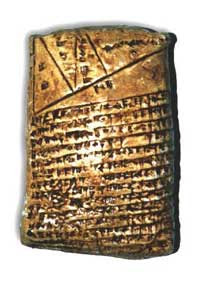
Clay tablets
Clay tablets like this were ideal for long-term written records. Far from ‘Flintstones’ clumsiness, these could be held in one hand.
Patriarchal records may have been carried on the Ark, later used by Moses in compiling Genesis (under inspiration).
The evidence that Moses wrote the Pentateuch, often referred to in the Bible as ‘the Law’ (Hebrewtorah), is overwhelming:
  1. Contrary to the views of Wellhausen and others, archaeological research has established that writing was indeed well known in Moses’ day. The JEDP hypothesis falsely assumes that the Israelites waited until many centuries after the foundation of their nation before committing any of their history or laws to written form, even though their neighbors kept written records of their own history and religion from before the time of Moses.4
  2. The author is obviously an eyewitness of the Exodus from Egypt, familiar with the geography,5flora and fauna of the region;6 he uses several Egyptian words,7 and refers to customs that go back to the second millennium BC.8
  3. The Pentateuch claims in many places that Moses was the writer, e.g. Exodus 17:14; 24:4–7;34:27; Numbers 33:2; Deuteronomy 31:9, 22, 24.
  4. Many times in the rest of the Old Testament, Moses is said to have been the writer, e.g.Joshua 1:7–8; 8:32–34; Judges 3:4; 1 Kings 2:3; 2 Kings 14:6; 21:8; 2 Chronicles 25:4; Ezra 6:18; Nehemiah 8:1; 13:1; Daniel 9:11–13.
  5. In the New Testament, Jesus frequently spoke of Moses’ writings or the Law of Moses, e.g.Matthew 8:4; 19:7–8; Mark 7:10; 12:26; Luke 24:27, 44; John 5:46–47; 7:19. Jesus said that those who ‘hear not [i.e. reject] Moses’ would not be persuaded ‘though one rose from the dead’ (Luke 16:31). Thus we see that those churches and seminaries which reject the historicity of Moses’ writings often also reject the literal bodily resurrection of the Lord Jesus Christ.
  6. Other New Testament speakers/writers said the same thing, e.g. John 1:17; Acts 6:14; 13:39;15:5; 1 Corinthians 9:9; 2 Corinthians 3:15; Hebrews 10:28.
Does this mean that Moses wrote Genesis without reference to any previous information? Not necessarily. Genesis comprises narratives of historical events that occurred before Moses was born. Moses may very well have had access to patriarchal records and/or reliable oral traditions of these events. In that case, such records would certainly have been preserved by being written (probably on clay tablets) and handed down from father to son via the line of
Adam-Seth-Noah-Shem-Abraham-Isaac-Jacob, etc.
There are 11 verses in Genesis which read, ‘These are (or ‘This is the book of’) the generations of …’ The Hebrew word toledoth translated ‘generations’ can also mean ‘origins’, ‘history’, or even ‘family history’, and each verse comes either before or after a description of historical events that involved the person named.9 The most likely explanation is that Adam, Noah, Shem, etc. each wrote an account of the events that occurred either right before or during his lifetime, and Moses, under the infallible inspiration of the Holy Spirit, selected, compiled, and edited these to produce Genesis in its present cohesive form.10
Genesis does not show a progress from idolatry to monotheism, as Wellhausen’s evolutionism requires. Rather, the Bible begins with an original revelation of God, which was later rejected to the point that the Hebrew nation itself descended into idolatry and so was given over to captivity by God.

What about the different words used for God?

Let us consider this in Genesis chapters 1 and 2. The word ’Elohim is used for God 25 times in Genesis 1:1–2:4a.11 It has the idea of an awesome and faithful Being, having creative and governing power, majesty and omnipotence, who is above the material world He created. It is a lofty title (= ‘God’) and is the appropriate word for Moses to have used for the first factual report of God’s creative activities.12
In Genesis chapter 2 from verse 4, the Hebrew uses the letters YHWH to refer to God. Sometimes translated ‘Jehovah’, it is more often translated ‘LORD’ (in small capitals), and is the most commonly used term for God in the Old Testament (6,823 times). It means ‘the One who always was, now is, and ever shall be’ and is the deeply personal name of God. It is therefore used in His personal and covenant relationships with people. Genesis 2:4b ff is the detailed account of how God made Adam and Eve, and of the setting He prepared for them.13 Here they were meant to live and work in loving covenantal fellowship with Him14 and with each other. It was entirely appropriate therefore that Moses should have used YHWH in writing this section of Genesis. In Genesis 2, YHWH is joined to‘Elohim to form the compound name YHWH-’Elohim (= the Lord God). This identifies the covenant God YHWH as being one and the same as ’Elohim, the almighty creator. There is no logical reason (particularly any based on the term used for God) to ascribe this account to any other author(s).

Computer agrees: Genesis had only one author

The following quote comes from Omni magazine of August 1982:
‘After feeding the 20,000 Hebrew words of Genesis into a computer at Technion University in Israel, researchers found many sentences that ended in verbs and numerous words of six characters or more. Because these idiosyncratic patterns appear again and again, says project director Yehuda Radday, it seems likely that a sole author was responsible. Their exhaustive computer analysis conducted in Israel suggested an 82 percent probability that the book has just one author.’
The same principles apply in the rest of Genesis and throughout the Old Testament.
The JEDP system is self-contradictory, as its proponents need to break verses into sections and even credit parts of sentences (that use more than one term for God) to different writers. Such a hotchpotch would be unique in ancient Middle Eastern literature.
The ‘scholarship’ used to promote the documentary hypothesis would be laughed out of court if applied to any other ancient book!

Conclusion

Ultimately, the author of Genesis was God, working through Moses. This does not mean that God used Moses as a ‘typewriter’. Rather, God prepared Moses for his task from the day he was born. When the time came, Moses had all the necessary data, and was infallibly guided by the Holy Spirit as to what he included and what he left out. This is consistent with known history, and with the claims and principles of Scripture (2 Timothy 3:15–17; 2 Peter 1:20–21).
On the other hand there is no historical evidence, and no spiritual or theological basis whatsoever for the deceptive JEDP hypothesis. Its teaching is completely false; the ‘scholarship’ that promotes it is totally spurious. Propped up by the theory of evolution, it exists solely to undermine the authority of the Word of God.